
Back to Resources
Cold email vs warm email: differences, examples and when to use each
Author
Stan Stojanovic
Date
Read time
7
min.


Last updated: October 19, 2026
Cold email introduces you to someone with whom you do not have an established conversation or relationship. Warm email uses genuine prior context, such as a direct exchange, a requested follow-up or an introduction. The difference is the relationship, not how much research went into the message.
A highly personalized email to a stranger is still cold. A scraped funding announcement, a guessed interest or an anonymous website visit does not create a conversation. This distinction helps your team choose honest wording and a suitable next step.
Cold email vs warm email at a glance
| Dimension | Cold email | Warm email |
|---|---|---|
| Starting context | No established direct relationship | A real exchange, introduction or relevant shared history |
| Opening | Explain who you are and why the topic may be relevant | Refer accurately to the previous context |
| Evidence | Verified account facts and approved claims | The actual conversation or relationship, plus current facts |
| Next step | A modest way to evaluate relevance | A step consistent with what was discussed or requested |
| Main risk | Assuming a need that has not been established | Overstating the relationship or treating old interest as current |
Teams sometimes use “warm lead” more broadly for someone who engaged with content. Keep the exact event visible in your records rather than relying on the label alone. A newsletter subscriber, a person who asked for pricing and a customer are not interchangeable audiences.
Examples of cold and warm emails
These are fictional examples to illustrate the distinction, not campaign results.
Cold introduction:
Hi Maya, your careers page lists SDR roles focused on European accounts. We prepare account research briefs for sales teams. Would a sample brief for one target account be useful?
The sender has an observation but no established relationship. The email should not say “following up on your interest” because no interest has been expressed.
Warm follow-up:
Hi Maya, you asked on our call for an example of the account briefs. I've attached the reviewed sample we discussed. Would it help to walk through the source checks together on Thursday?
This version is appropriate only if the call, request and attachment are real. Warmth comes from that actual exchange, not from using a friendlier tone.
When cold outreach makes sense
Cold outreach can be a way to introduce a relevant business offer to accounts that do not already know you. Start with an identifiable buyer role, a credible reason for contact and a next step that helps the person assess fit.
It is less useful when the audience is poorly defined or the message depends on pretending to know an internal problem. Research can establish context, but it should not be used to manufacture urgency or familiarity.
Before launching, define exclusions, contact review, reply ownership and stopping rules. A campaign is more than its first email. Someone must handle the answer and keep other sequences from contradicting it.
When warm outreach makes sense
Use a warm follow-up when it continues a genuine discussion, responds to a request or builds on an appropriate introduction. Refer to the specific context and explain the next step in the terms the recipient used.
If significant time has passed, acknowledge the gap and check whether the topic is still relevant. An old conversation does not prove that the person still has the same role, priorities or interest.
A content subscription is also a specific relationship. Do not assume it means the person requested a sales call or every type of marketing message. Keep the purpose of the interaction and the person's preferences visible to the team.
Does personalization turn a cold email into a warm email?
No. Personalization can make a cold introduction more relevant, but it does not create prior contact. Mentioning a public company announcement or using a person's first name does not change the underlying relationship.
A better progression is to earn a response, understand the buyer's context and agree on a next step. Once an actual exchange exists, future messages can accurately reference it. Automation should record that change, not assign it because a prospect opened an email.
For practical wording, see our B2B cold email templates. The referral and follow-up examples require real context; the observation-based example does not pretend a relationship already exists.
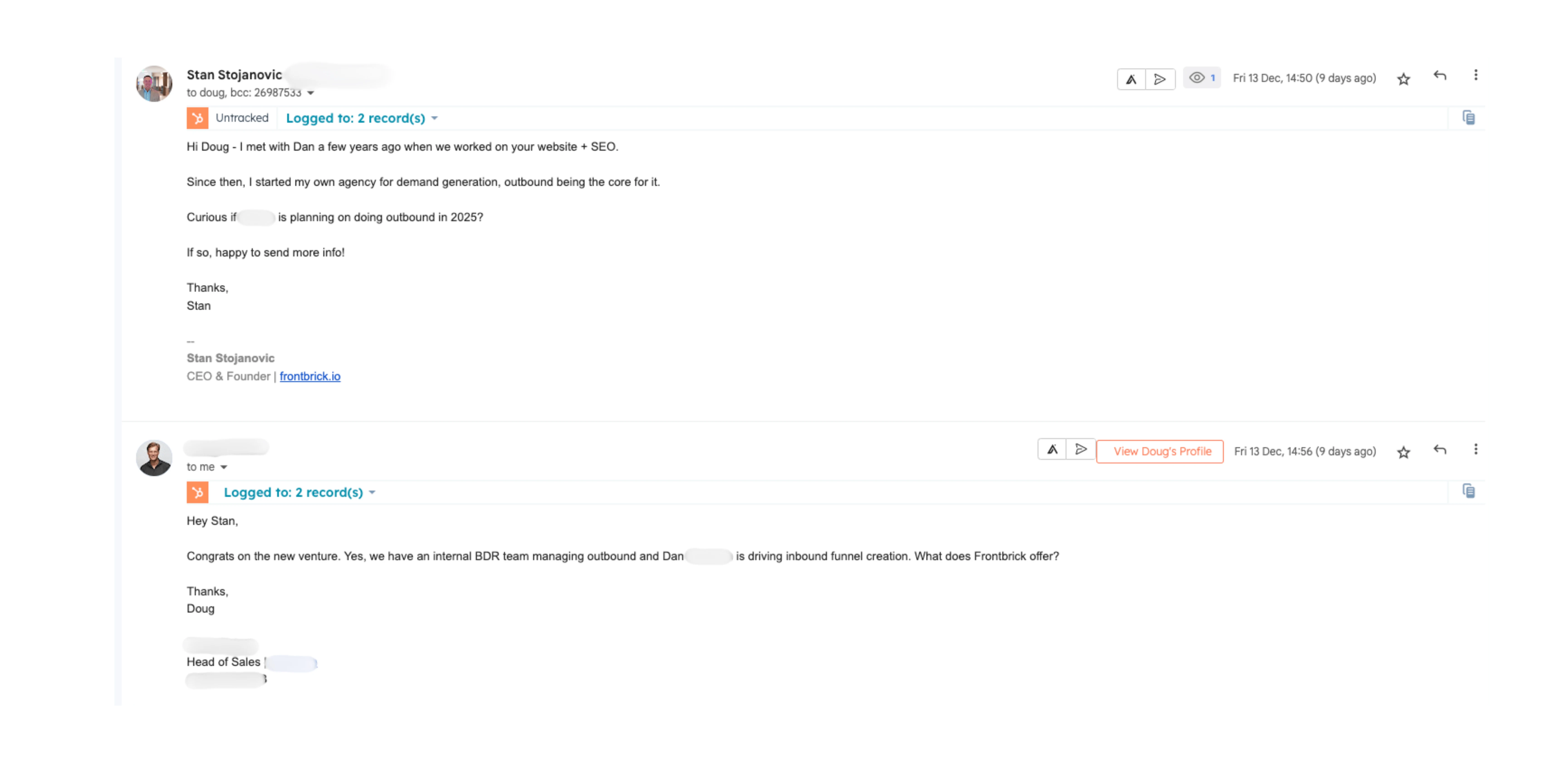
Keep relationship status separate from buying intent
A useful record can contain three independent fields: relationship evidence, account fit and the next agreed action. This prevents a single “warm” label from carrying several unsupported meanings.
| Observed event | What you can record | What you should not assume |
|---|---|---|
| Public hiring announcement | A dated business observation | Budget for your service |
| Content interaction | The specific known interaction | A request for a sales pitch |
| Direct question about the offer | The question and conversation date | Approval to buy |
| Agreed meeting | Topic, owner and time | A qualified opportunity before fit is checked |
| Request not to be contacted | Suppression instruction | Permission to try another sequence |
These are recommended record-keeping distinctions. Use the actual evidence available and avoid claiming to identify an individual from anonymous activity.
Where Clay and campaign tools fit
Clay can support structured account research and enrichment. In a proposed workflow, retain the source of an observation, review account fit and pass only approved context to the message writer. Use our Clay consulting service if you need help designing those controls.
Your campaign system should then handle real responses deliberately. lemlist's pause and resume guidance explains that reply automation can pause or end a lead's sequence depending on configuration. Check the actual rules and assign a person to review the response before deciding what happens next.
Tools can coordinate follow-up, but they cannot supply a relationship that does not exist. Keep customer conversations and commitments in the approved system of record so the next team member has the same context.
How to compare performance fairly
Compare cohorts with clear definitions. A list of previous demo requests will differ from a list of newly researched accounts. If the warm group performs differently, that does not prove that a subject line or tool caused the change.
Track interested replies, qualified conversations, meetings held and opportunities separately. Include the observation window and denominator for every rate. Do not present a universal cold or warm reply-rate benchmark without relevant supporting evidence.
Review the effort involved as well. Research, relationship development and follow-up all consume time. Choose the mix that fits the audience and the team's capacity to respond well.
Choosing agency support
Ask an agency how it defines cold, engaged, qualified and ready for sales. Request the exact evidence behind those labels and how opt-outs and existing conversations affect campaign enrollment.
Our cold email lead generation service can support a broader outreach process. A useful scope makes targeting, claim approval, reply handling and handoff responsibilities explicit rather than promising that personalization makes every lead warm.
Frequently asked questions
Is warm email the same as email warm-up?
No. Warm email describes relationship context. Email warm-up refers to practices associated with preparing or managing a sending account. They address different questions.
Is a LinkedIn connection automatically a warm sales lead?
A connection establishes a platform relationship, not necessarily interest in your offer. Reference only the context that actually exists and choose a proportionate next step.
Should a warm email be informal?
Match the tone to the real relationship. Familiarity should not be exaggerated, and an existing conversation still benefits from a clear purpose and accurate details.
Book Your Strategy Call Today
Want to see how frontBrick can help you generate qualified leads and fill your pipeline fast? Book your free strategy call now.
Book Strategy Call
Related Resources
See All Resources