
Back to Resources
Best Cold Email Subject Lines: 18 Examples and a Testing Plan
Author
Stan Stojanovic
Date
Read time
7
min.


Last updated: October 17, 2026
The best cold email subject lines make the message easy to place: who it concerns, what business issue it addresses, or why the sender is reaching out. They do not need a clever trick. They need to match the email that follows.
Below are 18 starting points for B2B outreach, with guidance on when each is appropriate. These are illustrative examples, not subject lines with verified performance results. Adapt them to a real buyer, a credible offer and evidence you can substantiate.
Cold email subject line examples by buyer context
Choose the context first. A subject about hiring only makes sense when the company has relevant open roles, and a reference to a conversation requires an actual conversation.
| Buyer context | Subject line examples | What the email needs to explain |
|---|---|---|
| A relevant operational problem | lead routing at [Company]; inbound handoff; pipeline reporting | Why this particular workflow may deserve attention, without claiming to know their internal problems |
| A verified hiring signal | your SDR hiring; onboarding new reps; sales hiring at [Company] | The public role or hiring evidence and how your offer relates to it |
| A specific service or deliverable | outbound account list; account research sample; CRM enrichment | What the buyer would receive and why it is useful for their role |
| A relevant business initiative | [Market] expansion; partner prospecting; your new [Product] | The verified initiative and a plausible connection to your service |
| A genuine referral or event | [Name] suggested I reach out; following up on [Event]; your question about [Topic] | The actual referral, encounter or question, with no invented familiarity |
| A resource you can provide | account selection checklist; sample prospect brief; outbound QA checklist | The resource itself and a low-effort way to review it |
Bracketed terms are fields to replace, not text to send. If the evidence is missing, choose a neutral subject rather than guessing.
How to choose the best subject for your campaign
Start with the sentence you want the buyer to understand after reading the email. For example: “We can help your new SDR team work from a researched account list.” A subject such as “your SDR hiring” fits only when the hiring is real and the message explains the connection.
“Quick question” tells the reader little. It may still be worth testing, but it should compete against a concrete alternative rather than becoming the default for every segment. Likewise, a company name alone is personalization in form, not necessarily in substance.
Keep the subject as short as clarity allows. There is no universal character limit that makes an email successful. Check how the subject and preview text appear on the devices your team uses, then remove words that do not help the reader understand the topic.
Avoid writing the subject before the offer exists. A catchy opener cannot resolve an irrelevant audience, weak proof or an unclear next step.
Match the subject line to the first sentence
Consider this fictional example for a team offering account research:
Subject: your SDR hiring
Hi Maya, your careers page lists two SDR openings focused on European accounts. We build researched account lists that give new reps a clear reason to contact each company. Would a sample brief for one of your target accounts be useful?
This example is usable only if the hiring detail and service description are true. It makes the connection between the subject, the observation and the offer explicit. It does not infer that Maya has a pipeline problem or promise an outcome without evidence.
Compare that with a subject such as “urgent pipeline issue” followed by a general introduction. The mismatch asks the recipient to spend attention on a problem you have not established.
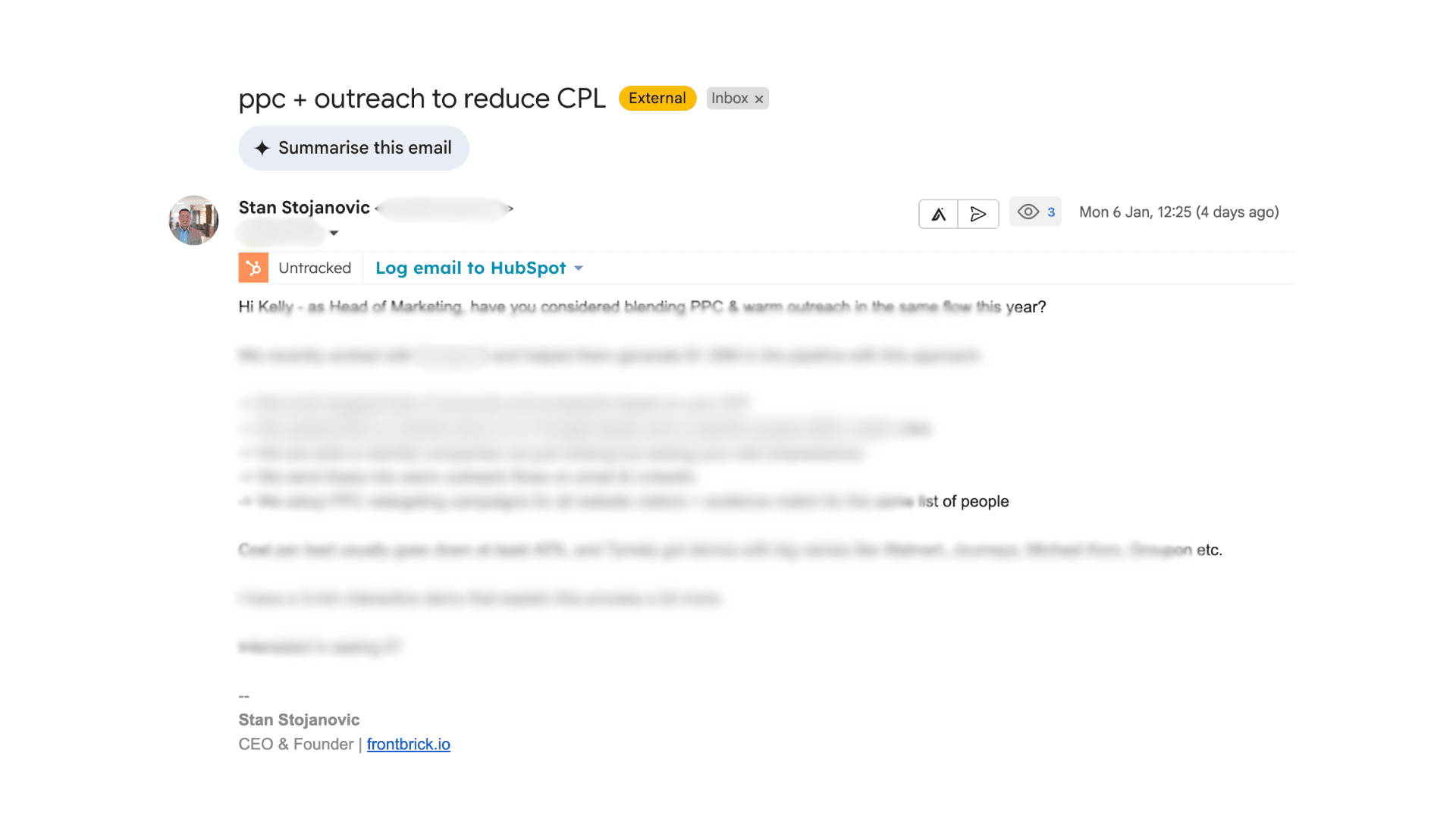
Subject line tactics to avoid
Do not add a fake reply prefix to make a new email look like part of an existing thread. Google says subjects and headers should represent the message accurately, including using reply or forward prefixes only for actual replies or forwards. See the Gmail sender guidelines.
Also remove artificial deadlines, invented referrals, unverifiable savings and claims that you have reviewed an account when you have not. A real deadline can be relevant; a fabricated one undermines the message.
Lowercase text, punctuation and emojis are style choices to test, not shortcuts to trust. Keep them consistent with the sender and the recipient's context. Avoid making multiple style changes at once and then crediting the subject for the result.
How to test cold email subject lines
Use a simple experiment with one decision to make. For example: does a verified hiring reference generate more qualified interest than a neutral description of the deliverable?
- Define one audience segment and one offer. Exclude customers, suppressed contacts and accounts already being worked by another rep.
- Write two subjects for the same body and call to action. Do not compare completely different campaigns and call it a subject test.
- Assign comparable prospects to each version. Keep the sender setup, follow-up approach and observation window consistent.
- Record delivered messages, positive replies, qualified conversations and meetings held. Define what counts before reviewing results.
- Review reply content as well as counts. A subject that attracts confused responses has not necessarily improved the campaign.
- Treat a small difference from a small sample as inconclusive. Extend the test or choose the clearer version rather than declaring a universal winner.
For an illustrative comparison, one variant could produce three interested replies from 100 delivered messages and another four from 100. That is a useful observation, but it is not enough by itself to establish that the second subject will outperform across audiences. These numbers are an example, not a frontBrick campaign result.
Opens can be a diagnostic signal, but an open does not establish buyer interest. Make qualified replies and subsequent sales outcomes the decision criteria. Document the denominator for every rate so the team can compare results consistently.
Where Clay fits in subject line personalization
Use research to decide which subject is justified. Our suggested workflow is to keep separate fields for the observed fact, source URL, date checked, buyer role and approved message angle. A missing or ambiguous source should route the contact to review, not trigger a more imaginative subject.
Claygent Builder supports account research and outbound copywriting workflows. In your implementation, require evidence before allowing an agent to use a trigger such as expansion or hiring. Test the workflow on companies with no useful signal as well as companies with rich public information.
For help building those controls, see our Clay consulting agency. For a specific industrial audience, use the more focused guide to B2B email subject lines for manufacturing.
Questions to ask a cold email agency
Ask how the agency chooses subject variants, verifies personalization and defines a positive reply. Request the audience, dates and denominators behind any performance example. A screenshot without that context cannot tell you whether the subject caused the result.
Ask who owns suppression rules, reply handling and changes to the message after launch. These responsibilities matter as much as the first line a buyer sees. Our cold email lead generation service is the place to discuss the full campaign workflow.
Frequently asked questions
What is the best cold email subject line?
There is no single best subject for every buyer. Start with a clear, truthful description of the relevant topic, then test it against another credible angle within the same audience and offer.
Should I include the prospect's name?
Use it when it makes the subject more natural or specific. A first name does not replace a reason to contact someone, and an incorrect field can make the entire email look careless.
Should follow-ups use a new subject?
A genuine reply can remain in the original conversation. Use a new subject when the message introduces a genuinely different topic, and avoid disguising a new introduction as an existing exchange.
Book Your Strategy Call Today
Want to see how frontBrick can help you generate qualified leads and fill your pipeline fast? Book your free strategy call now.
Book Strategy Call
Related Resources
See All Resources