
AI sales tools / Agents & automation
Hermes Agent for GTM: from account research to HeyReach drafts
Hermes Agent connects model reasoning with tools, reusable skills and persistent context. For GTM teams, the useful outcome is a reviewed workflow that carries audience strategy through to a campaign draft.
By Stan, Co-Founder & CEO at frontBrick · Reviewed October 18, 2026 · 8 min read
Hermes Agent is an open-source agent from Nous Research that can use tools, retain context and reuse skills. It fits teams prepared to own its configuration and review its work across research, enrichment and campaign preparation.
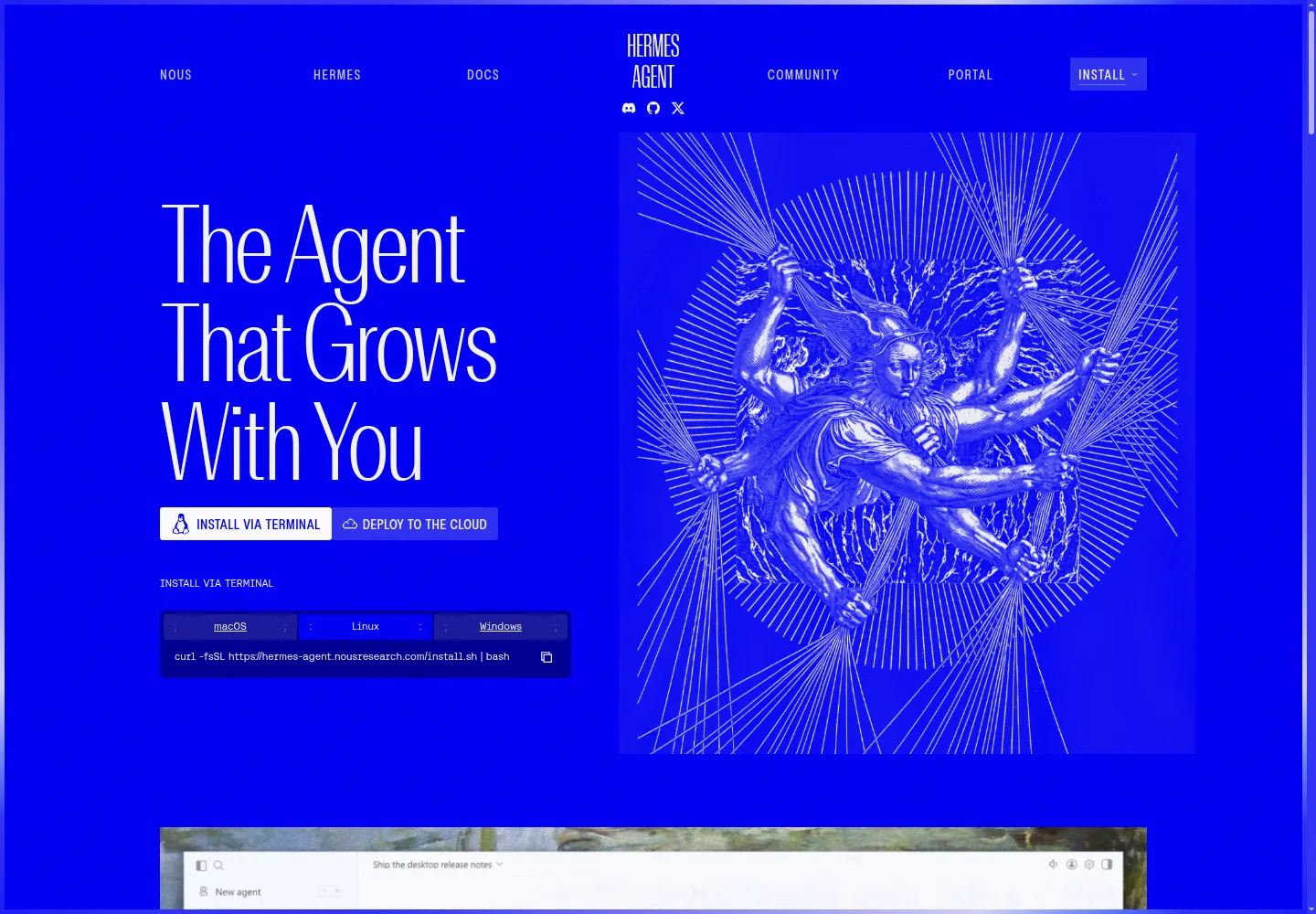
What Hermes Agent adds to an outbound system
Most outbound processes have several handoffs: choose an audience, collect companies, identify buyers, enrich records, write messages and prepare the sequencer. Hermes can coordinate that work through tools and reusable instructions. The commercial value comes from preserving the strategy between those steps, rather than moving a poorly qualified list faster.
The official Hermes documentation describes local and hosted deployment options, messaging integrations, tool use, scheduled work and reusable skills. Hermes is not itself a contact database, CRM or LinkedIn sending service. Those functions depend on the tools you connect and their permissions.
It fits a team with a defined offer, accessible source data and someone accountable for the system. It is a weaker fit when nobody can maintain credentials, interpret failed tool calls or approve campaign decisions. Installing an agent does not resolve disagreement about which buyers you should contact.
Watch the workflow: research, Clay enrichment and HeyReach
In the embedded walkthrough, Stan operates a custom campaign-preparation workflow through Slack. It uses a partner directory as the source, Clay for company and contact research, and HeyReach for the LinkedIn campaign draft. The interface and approval flow are an implementation built around Hermes, not a default feature that appears immediately after installation.
The demonstration includes commercial-angle selection, approval before enrichment spending, list review, message review and sequencer preparation. It ends with a draft campaign that contains contacts and the proposed sequence. It does not establish conversion results, unlimited lead availability or account safety at any sending volume. The useful lesson is the sequence of decisions and checkpoints. Watch Stan's full walkthrough.
Rebuild the method around your offer
The following is a proposed implementation plan. Start with a small sample from one named source. Treat any account or contact cap as a hard limit that the workflow must report against before moving forward.
- Write the client context. Document the product, target buyer, exclusions, positioning, approved proof and desired next step. Keep unsupported claims out of the source material.
- Choose an audience hypothesis. For a design-QA product, for example, a directory of agencies delivering complex websites may be relevant. Explain why that source is useful before collecting it.
- Define the extraction contract. Return canonical company domain, source URL, company name and the reason it belongs in the sample. Preserve missing values rather than filling them with guesses.
- Approve paid research. Show the enrichment steps, estimated usage and maximum batch size before the tools run. Avoid enriching fields that will never influence targeting or copy.
- Find the right people. Use a role hierarchy appropriate to the offer. Record whether each person matches the preferred role or an approved fallback.
- Qualify and review. Separate fit, data completeness and exclusions. A record can have complete contact data and still be the wrong prospect.
- Prepare copy and the campaign draft. Carry the source-backed commercial angle into a short message. Review the sender, audience, timing and reply-stop behavior inside the sending platform before launch.
| Stage | Reviewable artifact | Stop condition |
|---|---|---|
| Source sample | Company rows with source links | Wrong company type or unexpected volume |
| Enrichment | Selected fields, cost estimate and run status | Missing approval or exhausted budget |
| List QA | Accepted, rejected and unresolved records | Duplicates, customers or unsupported buyer roles |
| Sequence draft | Audience, copy, sender and delays | Unsupported personalization or unintended live status |
For a reusable field contract, keep company_domain, source_url, contact_profile_url, role_match, fit_reason, exclusion_reason, research_status and approval_status. The CRM or campaign store should also retain a stable record ID. This lets you retry an enrichment without losing the identity of the account it belongs to.
Skills, memory and the campaign ledger are different
A skill should explain how to do the job: source rules, enrichment selection, QA criteria and required approvals. Memory can retain concise preferences and working context. The official memory documentation describes bounded persistent notes and separate session recall. A statement that something was remembered is not proof it was saved; verify important context survives a fresh session.
Do not put your complete campaign database into memory. Store account status and campaign IDs in a durable table or CRM. Otherwise the agent may remember the process but lack a reliable answer to “Have we already contacted this person?” Use a suppression check against the record system every time.
Version the skill when the offer changes. Keep an approved copy and test the revised version on a saved sample before making it the default. Agent-generated improvements should pass the same review as instructions written by a person. The skills documentation explains the reusable instruction layer; your business owns the acceptance criteria.
Setup choices that affect reliability
Choose where the agent runs before promising scheduled delivery. A local installation needs its host and relevant services available. A hosted deployment changes the maintenance and access model. Document who handles updates, backups, monitoring and recovery.
Configure a model capable of reliable tool use, then connect the minimum tools for the pilot. Nous Portal is one route for model and tool access; other configured providers are possible. Do not confuse the Hermes Agent application with the Hermes model family. The Portal documentation explicitly distinguishes models suitable for agent tool use from chat-focused alternatives.
Test connections individually: read a known account, enrich one approved row and create a harmless draft in the correct workspace. Then test the complete chain. Keep credentials in the supported authentication configuration, not in a skill that may be copied or shared. Record the scope of each connection and its owner.
Hermes Agent pricing: software is only one line
Reviewed October 18, 2026. The core software is MIT-licensed and free. The official site lists optional Nous Portal tiers including Free, Plus at $20/month, Super at $100/month and Ultra at $200/month. These are not a promise that every model, browser session, hosting choice and connected data tool is unlimited. Check the current allowances on the official Hermes site and the selected provider.
Your operating budget has five parts: model usage, agent hosting, browsing or tool services, enrichment, and the sending platform. Add human review and maintenance to the business comparison. An inexpensive model that repeatedly retries a tool call can cost more per accepted campaign than a more capable one.
During the pilot, measure spend for one approved source batch and divide by the number of usable contacts, not the number of scraped rows. Keep rejected and unresolved records in the denominator analysis so you can see whether the audience source or enrichment choice is wasting budget.
Hermes versus Grok Bot, n8n and a standalone sequencer
Hermes is worth evaluating when configurable deployment, model choice and reusable operating instructions matter. Grok Bot offers a different packaged agent experience; verify its current account and shared-computer model before choosing. Compare the total maintenance burden, not just installation time.
n8n or Make is often easier to reason about when a process has stable inputs and explicit branches. Hermes can handle variable research and preparation, while a workflow platform records approved outcomes and coordinates deterministic steps. HeyReach remains the campaign execution layer in the demonstrated architecture. The agent does not replace that platform's sender controls or response handling.
For a simple list upload and standard sequence, an agent may add unnecessary complexity. Use it when the research, judgment and handoffs are substantial enough to justify an operating layer.
Failure recovery and measurement
Test expired credentials, a missing buyer, a source with duplicate companies, an enrichment timeout and a rejected message. A failed stage should preserve completed work and identify the unresolved rows. The recovery procedure should resume from a recorded checkpoint instead of restarting the whole pipeline and spending twice.
Track source-to-qualified-account rate, role accuracy, reviewer correction rate, enrichment cost per accepted contact and time to an approved draft. After launch, measure positive replies and qualified conversations separately. Those outcomes depend on the audience, offer and execution, not the agent brand.
Implementation and handover
A frontBrick implementation should leave your team with an audience contract, client context, versioned skills, configured tool connections, approval gates, a campaign ledger and a recovery runbook. The handover should include a demonstration of pausing a scheduled run and resuming a failed enrichment. Discuss your Hermes workflow with Stan. Scope and implementation pricing are custom.
Buyer questions
Does Hermes include Clay or HeyReach?
No. They are connected tools in this implementation. Their subscriptions, credits and permissions remain separate from the agent.
Can we use it from Slack?
Hermes supports messaging integrations, including Slack. The interactive campaign controls shown in the video are a custom workflow, so specify those deliverables if you want the same operating experience.
Can it remember our ICP?
It can retain context, but the approved ICP should also live in a versioned reference. Test recall in a new session and require the active version in each campaign brief.
Will it automatically launch outreach?
Only the capabilities and permissions you configure determine that. Keep list approval, copy approval and launch approval distinct. A campaign draft is a useful complete deliverable on its own.
Do we need a technical operator?
Someone must own configuration, model access, updates and failures. Your sales team can use a simpler front end, but operational responsibility still needs a named owner.
What should we validate before scaling?
Verify source quality, suppression, identity matching, budget limits and repeat-run behavior. Then confirm the reviewed sequence in the actual sending platform before expanding the audience.
Explore the connected tools
- HeyReach implementation guide
- Clay implementation guide
- Grok Bot implementation guide
- n8n implementation guide
Sources and editorial notes
Product facts and prices were checked against the sources below on October 18, 2026. Workflow recommendations are frontBrick’s implementation guidance. Examples are illustrative unless linked to a named case study. We offer paid implementation, and verified partner relationships are disclosed above.