

Back to Resources
Outbound Lead Generation Strategies for B2B Teams
Author
Jovana Stojanović
Date
January 11, 2024
Read time
10
min.


Last updated: September 26, 2026
Outbound lead generation is the process of approaching selected companies and people to start sales conversations. For a B2B team, an effective strategy connects four decisions: who to contact, why your offer matters now, which channel suits the conversation, and what qualifies as a useful outcome.
Start with one customer segment and a specific problem. Research evidence that makes the outreach relevant, coordinate email and LinkedIn around the same account, and measure qualified conversations through to pipeline. More messages cannot compensate for an unclear offer or the wrong audience.
This guide explains how to build that process and when hiring a cold email agency makes sense.
When is outbound lead generation a good fit?
Outbound is worth testing when you can identify a reachable audience, explain a valuable problem, and support the cost of acquiring a customer. It is especially useful when you want to investigate a defined segment rather than wait for those companies to discover you.
Before starting, answer three questions:
- Can we describe companies that have the problem, including clear exclusions?
- Can we offer a credible next step that helps the buyer evaluate us?
- Is someone responsible for handling replies and turning interest into a sales conversation?
If those answers are vague, begin with customer research and a small manual test. Outsourcing delivery does not remove the need to understand your offer.
Outbound and inbound can support each other. A prospect may receive an email, visit your site, read a case study, and return later through search. Keep that supporting content current so the outreach leads somewhere useful.
1. Choose an account segment before writing the message
An ideal customer profile should do more than name an industry and employee range. Define the situation that makes your offer relevant.
For example, a sales training company could target businesses building their first multi-person sales team. A company with the right headcount but no sales hiring plans might be a weaker fit than a smaller company actively recruiting sales managers.
Create a short campaign brief:
| Decision | What to specify |
|---|---|
| Account fit | Business model, geography, size, and relevant operating situation |
| Contact fit | Who owns the problem and who influences the decision |
| Exclusions | Customers, active opportunities, competitors, and unsuitable segments |
| Relevant evidence | What can you verify about the business before reaching out? |
| Offer | What useful outcome or evaluation can you credibly provide? |
| Qualification | What must be true for sales to accept the conversation? |
Start with a segment narrow enough that the same core message makes sense for each account. You can personalize the evidence without inventing a different value proposition for every person.
2. Use evidence to prioritize accounts
A funding announcement, new executive, or open vacancy can suggest a change worth investigating. It does not prove that the company wants to buy your service.
Connect the observation to a plausible business question. If a business is hiring several SDRs, your sales onboarding service may be relevant. Your message should ask about that challenge, rather than declare that the team has an onboarding problem.
Provider intent data can also support prioritization. Treat it as an additional research input, then verify account fit and the reason for outreach.
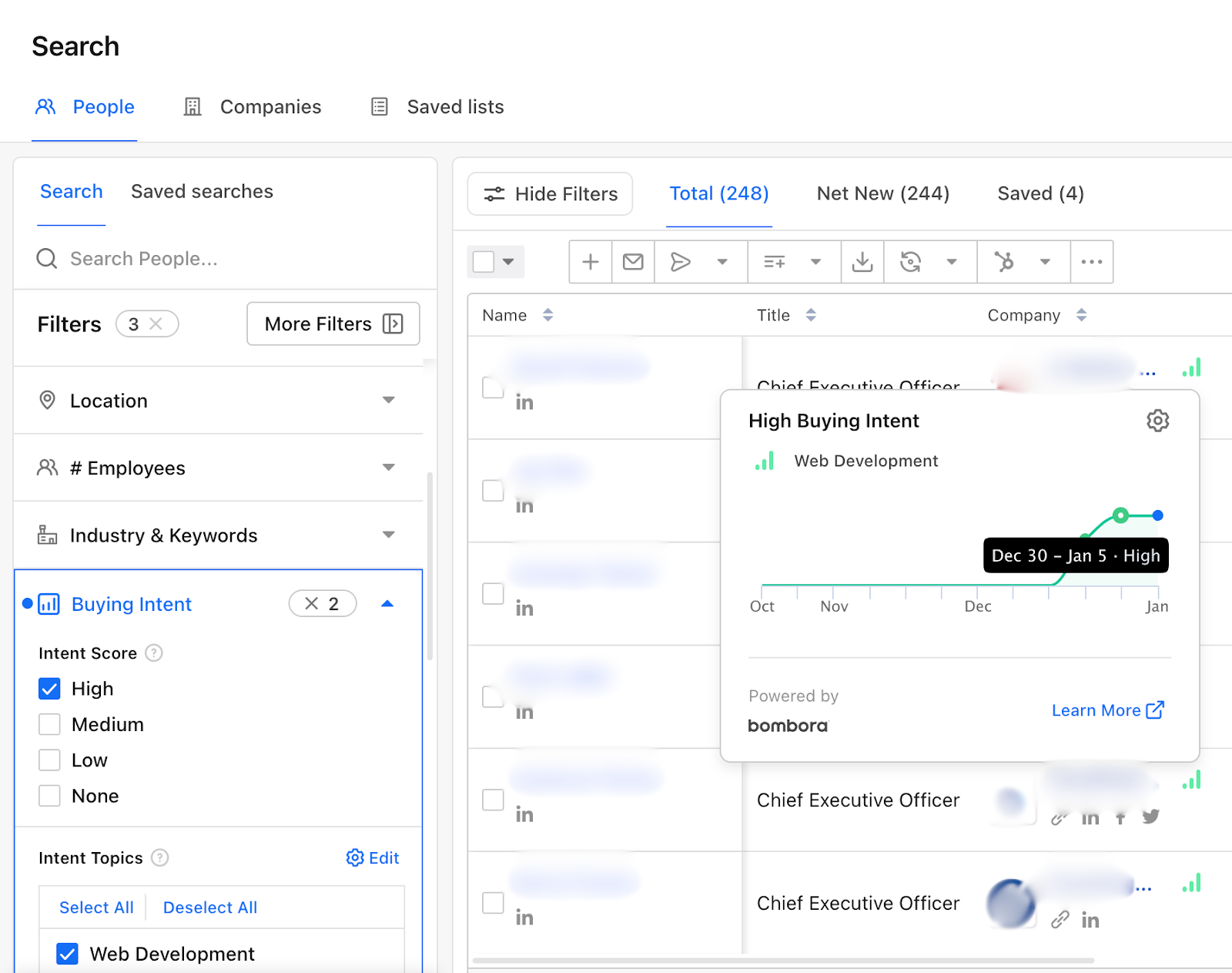
For each priority account, retain the observation, its source, and the date you checked it. Separate a fact such as “three sales vacancies are listed” from an interpretation such as “the business may need onboarding help.” This distinction makes both the message and the internal review more reliable.
Where Clay helps with targeting
Clay can organize account research and enrichment before records enter a campaign. Claygent supports agents for tasks such as account research and lead scoring, with configurable instructions and outputs. Its current capabilities are documented in the Claygent Builder guide.
A practical workflow is to qualify companies first, research a relevant signal, identify the right person, and check contact data before export. Ask research steps to return supporting URLs and an unknown outcome when evidence is missing. Review a sample before increasing volume.
Our B2B data enrichment guide covers how enrichment supports account research. If you need help implementing it, our Clay consulting agency page describes the service.
3. Make cold email easy to understand and answer
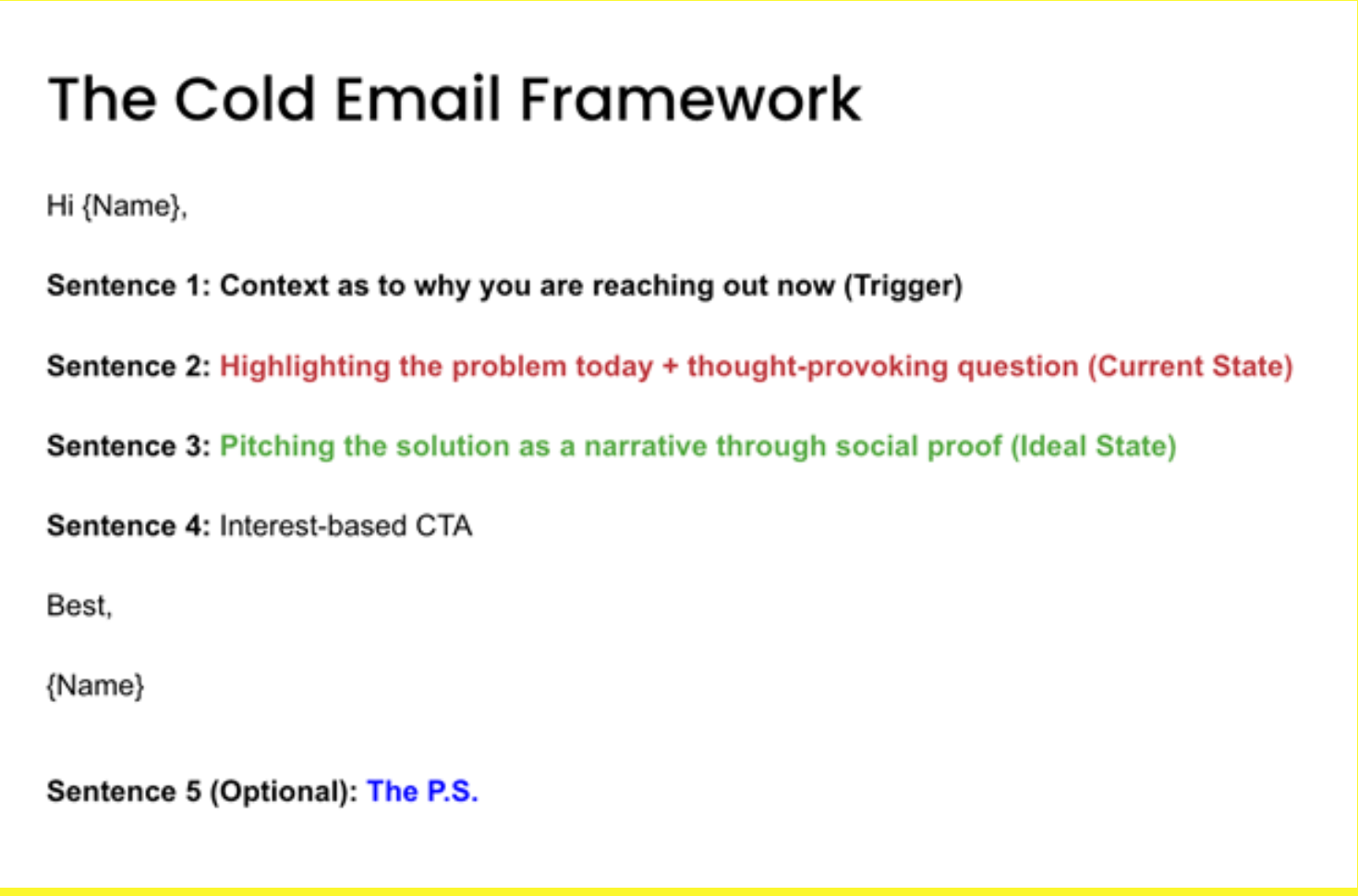
A cold email should make the relevance clear without asking the reader to decode a long pitch. Use a specific observation, a reasonable problem hypothesis, a credible offer, and one next step.
Here is an illustrative message for a sales onboarding service, not a reported campaign result:
Hi Alex,
I saw your team is recruiting three SDRs. How are you planning to keep onboarding consistent as they join?
We help sales teams turn their existing call recordings and process notes into a practical onboarding plan.
Would a short outline of that approach be useful?
Only use the hiring detail if you have verified it. Replace the offer with something your business actually delivers. If you have relevant evidence from a client, include a concise, accurate proof point instead of broad promises.
The same principle applies to follow-ups. Add a relevant example, clarify the offer, or answer an obvious concern. Repeating “just checking in” does not give the buyer a new reason to respond.
Check delivery before expanding volume
An outbound lead generation strategy also needs working email infrastructure. Review authentication, sending practices, recipient feedback, and removal requests before scaling.
Google's email sender guidelines describe requirements for messages sent to personal Gmail accounts, including authentication and additional requirements for bulk senders. Use the requirements relevant to your sending setup and recipient providers. Passing a technical check does not guarantee inbox placement or interest in your offer.
Inspect delivery failures and complaint signals alongside campaign results. If a new batch performs poorly, diagnose the list, infrastructure, and message before simply sending more.
4. Coordinate LinkedIn with email
LinkedIn can help you understand someone's professional context and continue a conversation in a channel they use. It works best when the person managing it can see the account's other outreach.
Sales Navigator provides lead and account filters for narrowing a search. Use the relevant role and company criteria, then review the resulting profiles. LinkedIn maintains the current search filter definitions.
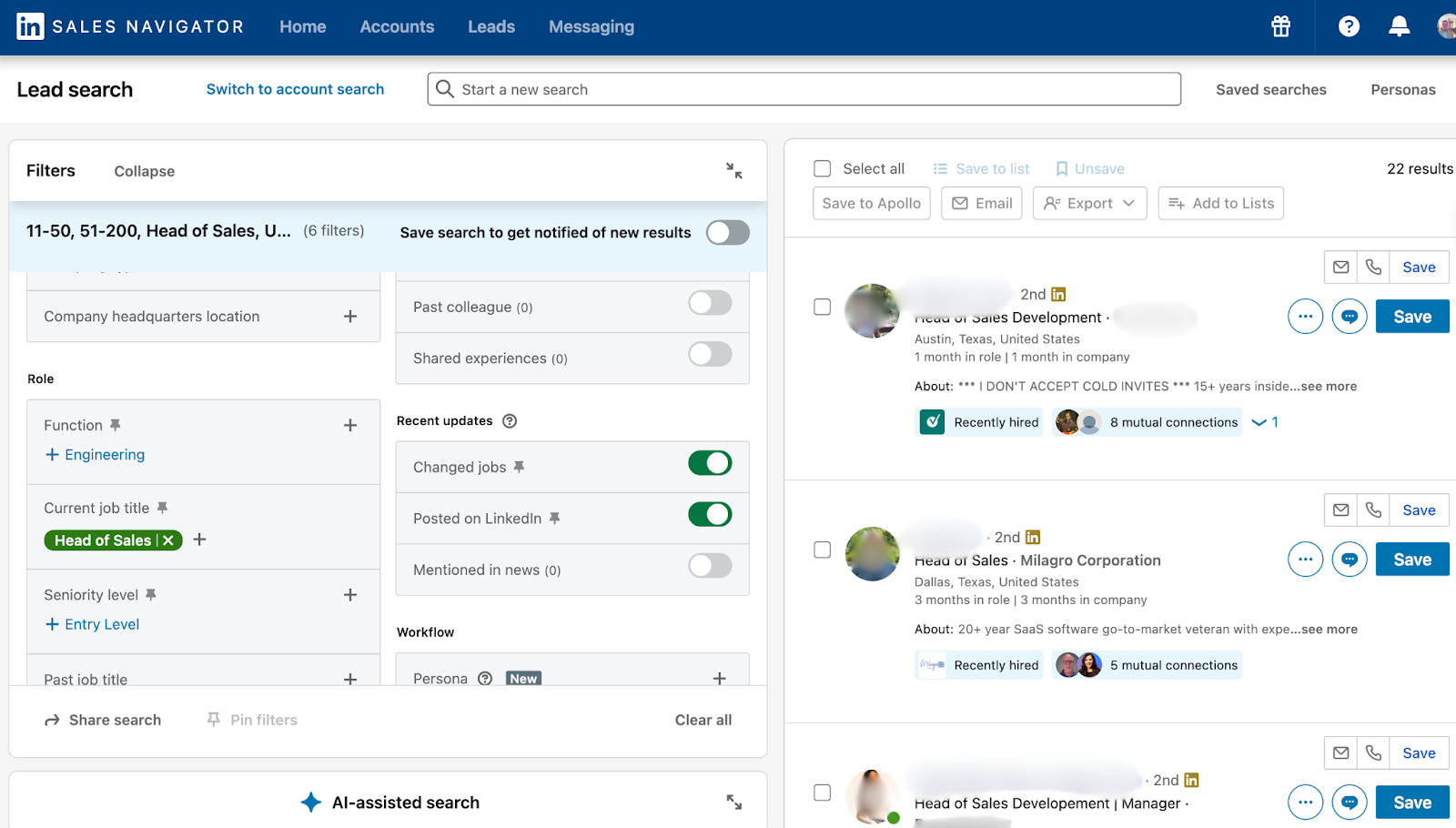
A coordinated process might use LinkedIn to confirm the person's role, identify a relevant post, or establish a connection before a later conversation. Choose the action because it helps the interaction, not because a sequence has an empty step.
Do not send a fresh LinkedIn pitch while a colleague is already handling the person's email reply. Assign an account owner, record the last meaningful interaction, and pause other outreach when a conversation starts.
For a deeper workflow, read our LinkedIn prospecting guide.
5. Use a flexible sequence with clear stop rules
There is no universal number of touches that every campaign needs. Build the sequence around the buyer, the offer, and the information available.
The following is an illustrative sequence to test, not a performance benchmark:
| Stage | Action | Purpose |
|---|---|---|
| Research | Confirm account fit and a relevant contact | Avoid approaching the wrong business or person |
| Initial email | Explain the observation and offer | Test whether the problem is relevant |
| LinkedIn review | Check context and engage only when useful | Support a recognizable, informed approach |
| Follow-up | Add a relevant example or answer a likely concern | Give the buyer more information |
| Optional call | Call when appropriate for the market and contact | Explore the business question directly |
| Close or defer | End the sequence or agree on a future time | Keep ownership and status clear |
Stop on an opt-out. Pause automated follow-ups when someone replies, books a meeting, becomes an active opportunity, or is found to be unsuitable. Handle “not now” according to what the person actually said.
Cold calling can be a useful part of this process, but it is not mandatory for every segment. Give the caller the same research and interaction history as the rest of the team so the prospect does not have to restart the conversation.
6. Treat strategic accounts as a shared sales effort
For a small set of valuable accounts, invest more research in the buying group. Map who experiences the problem, who owns the budget, and who will evaluate implementation.
Adapt the business case to each role. An operations leader may care about adoption and workload, while a finance leader may need a clear cost comparison. Both messages should describe the same offer consistently.
Coordinate account activity across the team. Reaching several people can be appropriate, but sending duplicate pitches without shared ownership creates confusion. Use the CRM to track relationships, objections, and the next agreed action.
Should you hire a cold email agency or build internally?
An agency can help when you have a credible offer and need the capacity or expertise to research accounts, operate campaigns, and improve execution. An internal team may suit a business with dedicated ownership, strong customer knowledge, and time to maintain the process.
Compare responsibilities rather than counting tools or promised messages.
| Area | What to establish before choosing a provider |
|---|---|
| Targeting | Who defines and approves accounts, contacts, and exclusions? |
| Infrastructure | Who owns domains, mailboxes, configuration, and monitoring? |
| Research | What evidence is collected and how is it reviewed? |
| Messaging | Who approves claims and supplies valid customer proof? |
| Reply handling | Who responds, qualifies, schedules, and records outcomes? |
| Reporting | Are interested replies separated from meetings and opportunities? |
| Handover | What data, documentation, and access remain with your business? |
Ask how “qualified lead” is defined. A positive reply, booked meeting, held meeting, and sales-accepted opportunity are different outcomes. Agree on those definitions before comparing proposals.
A provider should explain the assumptions behind its plan, including audience size, offer maturity, sales capacity, and the test needed before expansion. Be cautious about guarantees that ignore those conditions.
If cold email is your main channel, see our cold email lead generation agency service. For coordinated channel delivery, review our outbound lead generation agency service.
Measure the path from outreach to pipeline
Use a shared campaign view with unique contacts and consistent time periods. Separate activity from commercial progress.
Track contacted accounts, delivered messages, interested replies, booked meetings, held meetings, sales-accepted opportunities, and won revenue. Add total campaign cost, including tools, data, agency fees, and internal operating time where applicable.
Calculate cost per held qualified meeting and cost per accepted opportunity. Compare results by segment and campaign cohort so an older campaign with time to close is not treated as equivalent to a campaign launched last week.
When performance weakens, investigate the stage where people drop out. Few interested replies suggest a targeting, relevance, or delivery problem. Many bookings but few held meetings point toward scheduling and qualification. Meetings without accepted opportunities deserve a review of fit and the sales handoff.
Frequently asked questions
What is the best outbound lead generation strategy?
The best starting strategy is the one you can test against a defined audience and offer. Begin with a small researched segment, a clear message, and one primary channel. Add channels when they improve the conversation and your team can coordinate them.
Is outbound lead generation the same as cold email?
No. Cold email is one channel. Outbound can also include LinkedIn, calls, and coordinated account outreach. The strategy includes targeting, research, qualification, and follow-up across whichever channels you use.
How quickly should outbound produce results?
Separate the time needed to launch and learn from the time needed to create pipeline or close revenue. Timing depends on the audience, offer, infrastructure, and sales cycle. Set review points for the pilot rather than assuming every business will see the same result in a fixed number of days.
Can AI run the entire outbound process?
AI can assist research, classification, and drafting. Keep clear ownership of the offer, factual claims, exceptions, and sales conversations. A system still needs checks to prevent unsupported personalization and follow-ups that ignore a prospect's reply.
What should we prepare before contacting an agency?
Bring your target customer definition, offer, relevant customer proof, current sales process, and definition of a qualified outcome. That gives an agency enough context to propose a testable plan and explain what it will need from your team.
Book Your Strategy Call Today
Want to see how frontBrick can help you generate qualified leads and fill your pipeline fast? Book your free strategy call now.
Book Strategy Call
Related Resources
See All Resources