


TL;DR
- ABM works when the account is the unit of work: one named list, shared by Sales + Marketing, hit from multiple channels until the account activates.
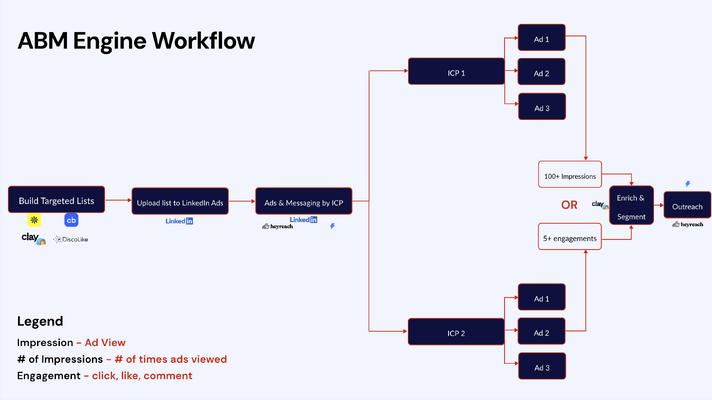
- The workflow we run is simple: Build list → Upload to LinkedIn Ads → Drive enough impressions or 5+ engagements → Enrich + segment & score in Clay → Launch outreach (email + LinkedIn). This is the ABM Engine Workflow frontBrick runs.
- The trigger isn’t “someone filled out a form.” It’s “this account has seen us enough times to recognize the brand.”
- If you don’t connect LinkedIn engagement → CRM accounts → outbound sequencing, you’ll keep having the same internal argument: “ads don’t create pipeline.”
- Start with 200 - 500 target accounts, not 2,000. You need enough frequency to create recognition.
- Your first KPI isn’t MQLs. It’s: % of target accounts that hit the activation threshold (aim for 100+ paid impressions or 5 engagements) and then become opportunities.
Direct answer
If you want multi-channel ABM that actually produces pipeline, run one connected workflow: build a named target account list, warm it with LinkedIn ads until the account has enough exposure to recognize you, then use that engagement as the trigger to enrich, segment, and launch outbound. ABM is not “ads” or “outbound.” It’s Sales + Marketing executing one account-level system.
What is the ABM Engine Workflow?
The ABM Engine Workflow is the end-to-end system frontBrick runs for B2B SaaS clients to create pipeline from a named account list:
- Build the list (accounts + buying committee)
- Upload list to LinkedIn Ads using Clay audience sync. Check the actual match rate against your own list
- Run ads + messaging by ICP
- Wait for activation: 100+ impressions OR 5+ engagements
- Enrich + segment in Clay + lookup against original audience
- Launch outreach via Instantly.ai + HeyReach OR lemlist
That’s it.
Everything else is implementation detail.
Pro tip: If your team can’t draw the workflow on a whiteboard in 60 seconds, your ABM program is too complicated to execute consistently.
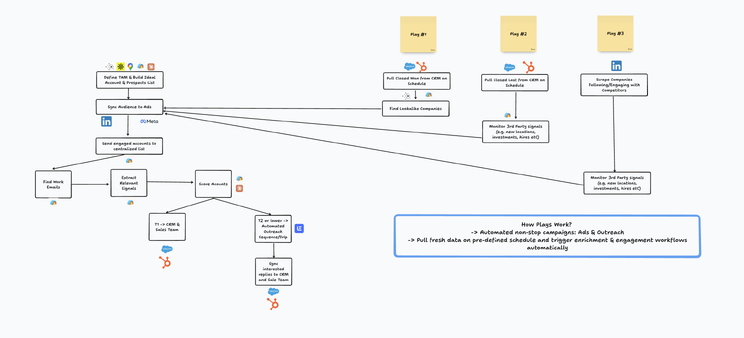
A threshold to test, not proof of buying intent: 100 impressions or five engagements is an example routing rule. Account-level engagement does not identify which individual saw an ad or prove that someone is ready to buy. Review fit, recency, existing opportunities and contact exclusions before outreach.
Why do we use impressions/engagement as the trigger instead of form fills?
Because the B2B buyer journey is multi-touch. People see you across ads, content, outreach, and search before they book.
A lot of teams treat “form fill” as the only valid buying signal.
In ABM, that’s late.
We’ve found the practical early indicator is recognition. Recognition shows up as repeated exposure (impressions) and lightweight engagement.
Pro tip: Treat engagement as a routing signal, not a success metric. The goal isn’t likes. The goal is activation → opportunity.
How do you build the account list without wasting weeks?
Build the list in layers.
- Start with firmographic fit (industry, employee count, geography)
- Add technographics only if it changes your message (e.g., “uses HubSpot”)
- Then map the buying committee roles you know you close (e.g., VP Marketing, Head of Demand Gen, RevOps)
You don’t need perfection.
You need a list you can actually reach with frequency. When your ICP is on LinkedIn, use Apollo.io as one source for account and contact research. Check coverage for your market before scaling the list.
What do you run on LinkedIn Ads in the first 30 days?
We run two things:
- Proof ads (case studies, results, “here’s what we built”)
- POV ads (a sharp claim that the right buyer agrees with)
The goal is simple: get accounts to recognize the brand so the outbound doesn’t land cold.
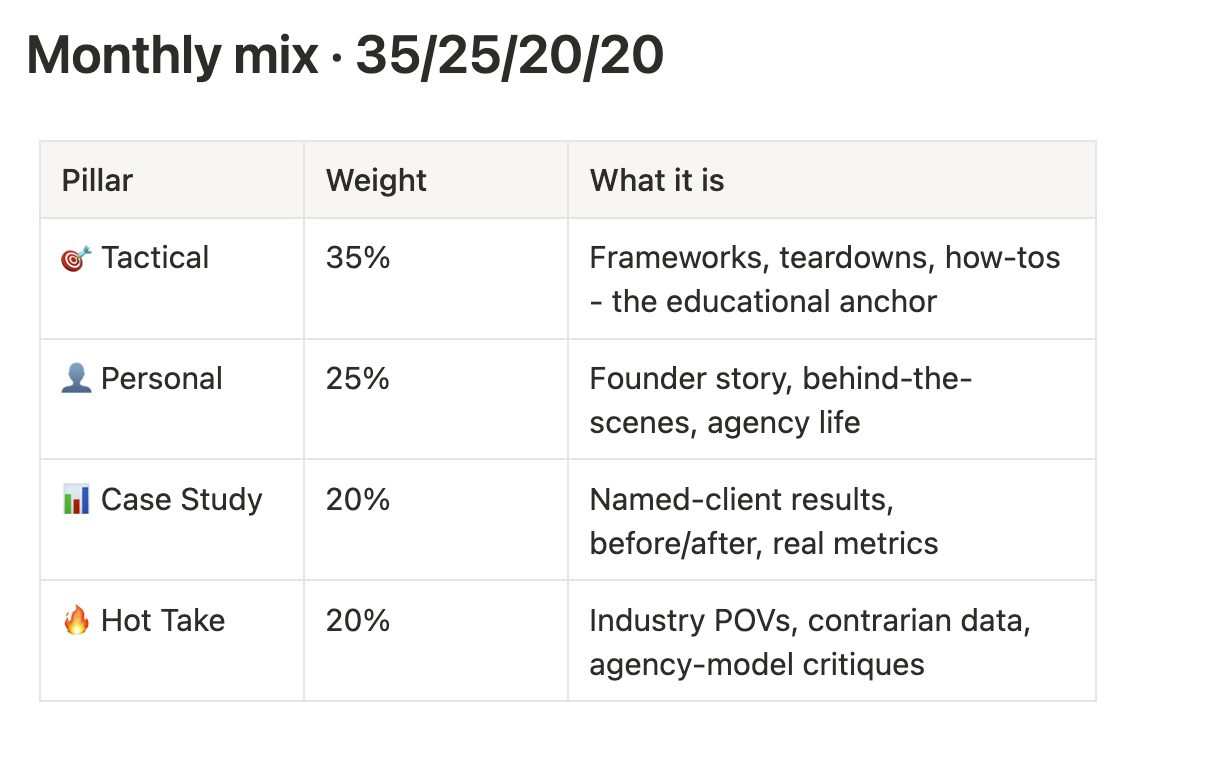
Our starting content mix is 35/25/20/20. Adjust it to your audience and the evidence from your campaigns.
- 35% tactical
- 25% personal
- 20% case study
- 20% hot take
How do you connect LinkedIn engagement to Clay and your CRM?
The connective tissue is the whole point. LinkedIn offers engagement data natively.
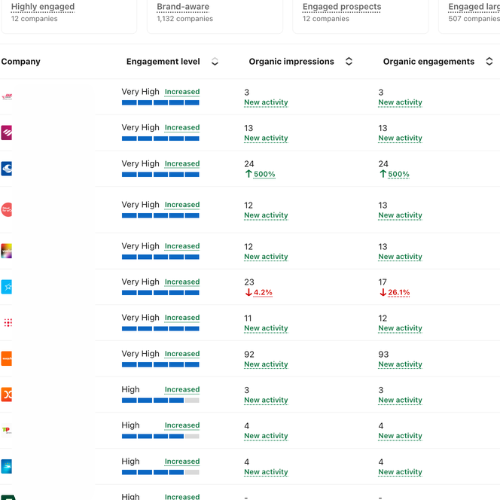
We sync ad engagement data to the account level on autopilot via API, match those accounts in Clay against the original audience, enrich the buying committee, segment by ICP, then push the right contacts into the outbound system.
If your workflow stops at “LinkedIn Campaign Manager metrics,” you will never be able to defend spend.
Pro tip: Build a single “ABM Accounts” object in your CRM with fields for impressions, engagements, last-seen date, and activation status. If it’s not in the CRM, it doesn’t exist.
The ABM Engine Workflow (framework)
Step 1 - Start with your ICP. Take CRM closed won deals, demo recordings from sales team and all other assets and add to Claude Code. Analyze and have it help you define the ICP.
Step 2 - Build the list of your dream accounts and find every decision maker or champion.
Step 3 - Use Clay to push your audience to LinkedIn Ads
Step 4 - Start running thought leader ads (from your and your employees profiles)
Step 5 - Prepare multi-channel outreach sequence
Step 6 - Sync engaged prospects data back to Clay and match against original audience. Segment by ICP, persona and score.
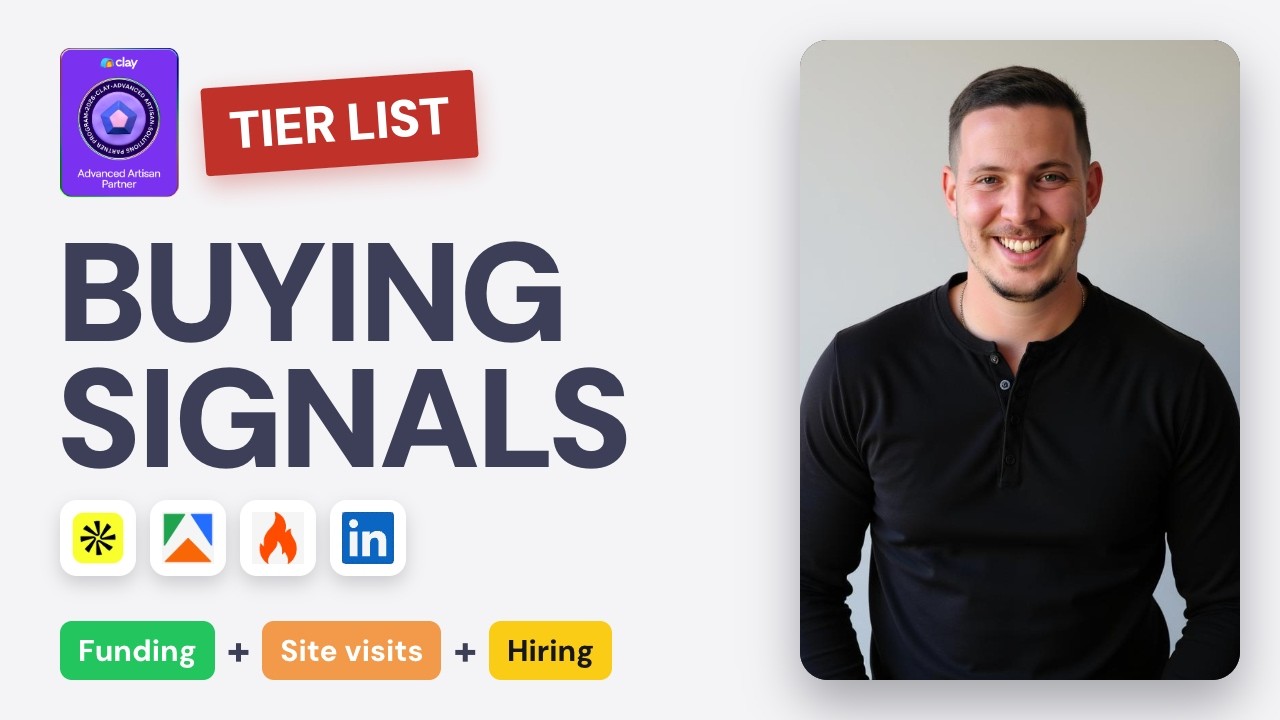
Step 7 - Layer more first party signals (e.g. website visitors) and 3rd party signals (funding rounds, new product launches, new hires etc).
Step 8 - Push leads to your campaigns and start the outreach.
Now you are reaching out to accounts with prior exposure to your brand. That gives the message more context. Measure the lift against a comparable cold audience rather than assuming a fixed multiplier.
And you might ask, what about attribution? Who gets attributed, sales or marketing? Simple answer - both. Track the observable touchpoints and measure blended customer acquisition cost across sales and marketing. Some interactions will remain invisible to your tracking.
Pro tip: add self-attribution form to your demo request page. You'll be surprised to see how it's different from what your CRM says.
FROM OUR ORIGINAL ABM SNAPSHOT
Historical results from the original July 2026 article. Influence records engagement associated with opportunities. It does not establish that advertising alone caused these outcomes.
FAQ
How many target accounts should you start with in ABM?
Start with 200 - 500 accounts so you can afford frequency.
If you start with 2,000 accounts, your ads will be invisible and your outbound will stay cold. Unless your budget is high.
What does ABM stand for and what is the simplest definition?
ABM (account-based marketing) is a B2B strategy where Sales + Marketing focus resources on a defined set of high-fit accounts and run coordinated outreach across channels to influence the full buying committee.
Do LinkedIn Ads create pipeline in ABM?
Not alone.
LinkedIn Ads create recognition and repeated exposure.
Pipeline gets created when that exposure becomes a trigger for enrichment, segmentation, and outbound.
What tools do you need to run the ABM Engine Workflow?
Minimum stack:
- A list source (Apollo / Sales Nav)
- LinkedIn Ads
- Clay
- A sending tool (Instantly + HeyReach OR Lemlist OR Smartlead + HeyReach)
- A CRM
Everything else is optional until you can run the loop weekly.
What should you measure in ABM instead of MQLs?
Measure account activation and account movement:
- % of target accounts that hit the activation threshold
- % of activated accounts that become opportunities
- Pipeline created from the named list
What should happen before an account enters outreach?
- One account identity: match on a normalized company domain and retain the CRM account ID. Review subsidiaries and duplicate records.
- One owner: route active opportunities to their existing owner. Suppress current customers, opt-outs and contacts already in a sequence.
- A valid contact: verify the role and contact data before enrollment. Account engagement alone is not enough.
- A clear reason to write: connect the account's situation to a relevant offer. Do not tell a person you tracked their ad activity.
- A feedback loop: log enrollment, replies and opportunity changes back to the same account. Separate sourced pipeline from influenced pipeline and avoid counting the same deal twice.
Build the workflow around your market
Start with ICP research, use the Pain Triangle to segment accounts, then choose the buying signals that actually change your next action.
If you want our team to connect the research, advertising, enrichment and outreach, explore our ABM implementation service or Clay implementation service.
Originally published in The ABM Engineer on LinkedIn, July 1, 2026. Read the original article. Adapted for frontBrick with implementation checks and a privacy-safe results panel.
Book Your Strategy Call Today
Want to see how frontBrick can help you generate qualified leads and fill your pipeline fast? Book your free strategy call now.
Book Strategy Call